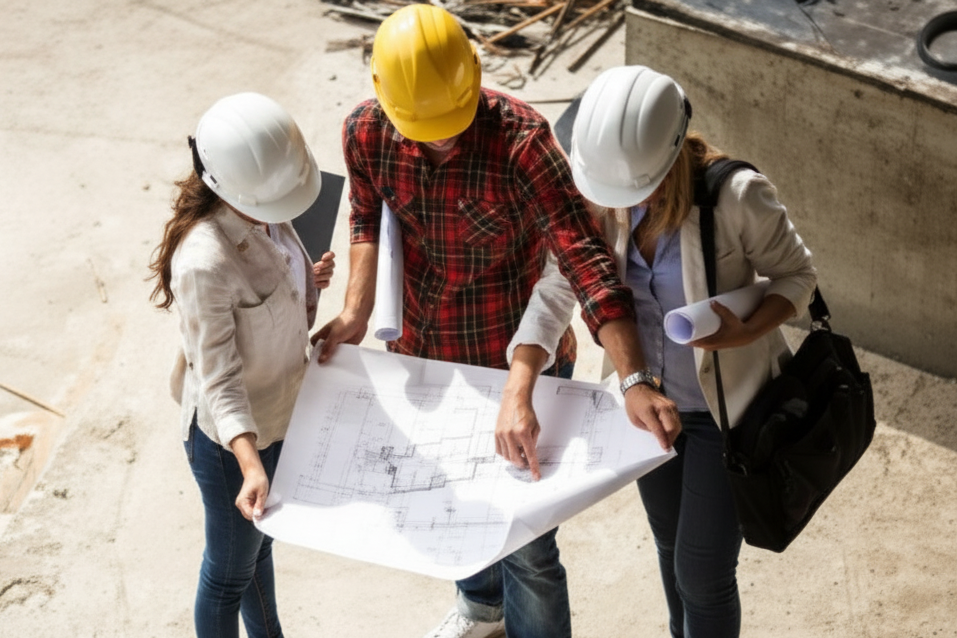
Please review our Frequently Asked Questions (FAQs) and their answers.
If you still cannot get the answers you need please contact us and a member of our team will contact you for assistance.
Frequently Asked Questions — Laminated Timber Homes
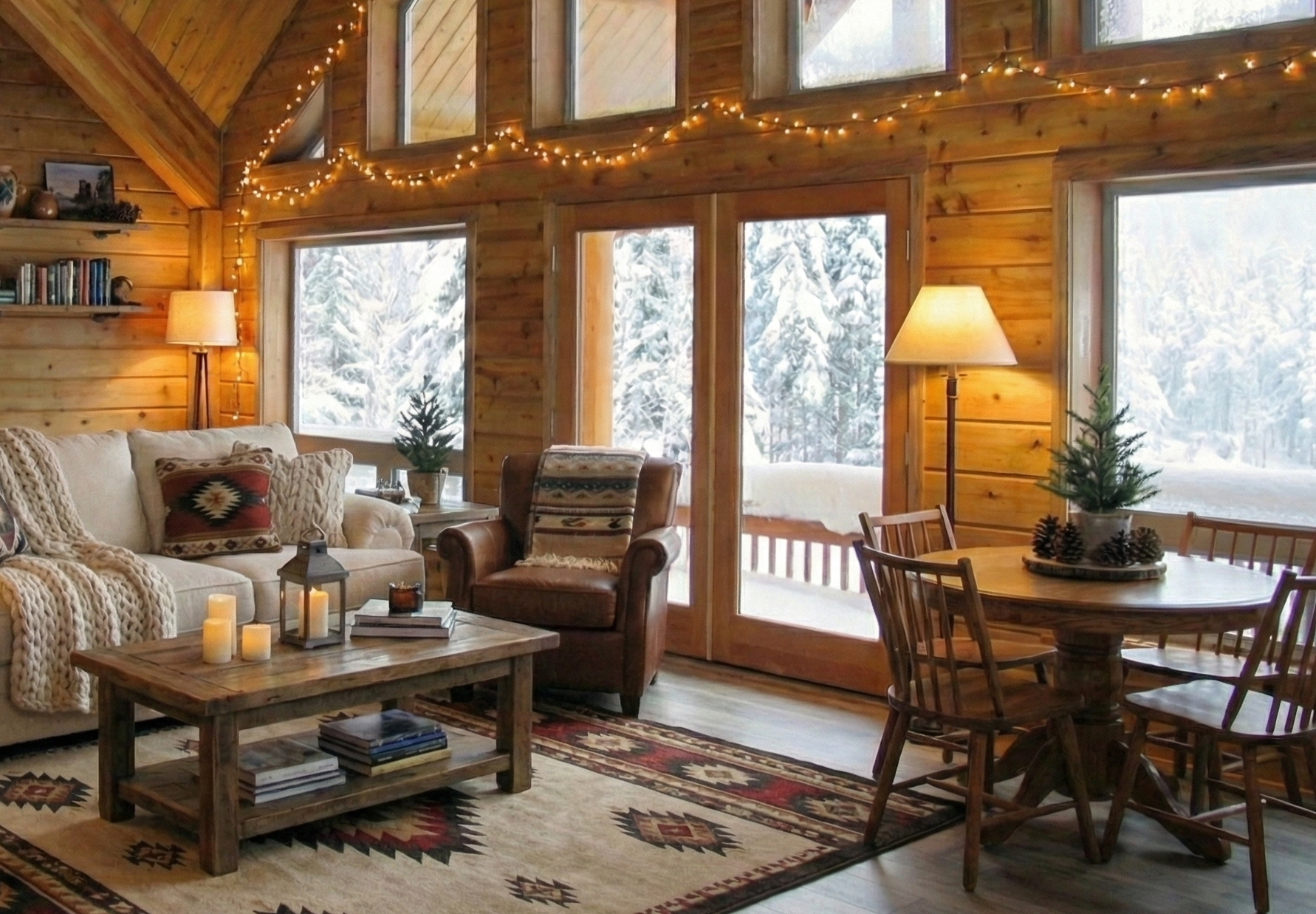
Are laminated timber homes an environmentally responsible building choice?
Yes. Laminated timber construction is widely recognized as a responsible and forward-looking building approach. Engineered wood systems make efficient use of sustainably managed forests, allow smaller-diameter trees to be utilized effectively, and store carbon throughout the life of the building. Because laminated timber components are precision-manufactured, material waste is significantly reduced compared to conventional construction methods. When combined with proper design and maintenance, laminated timber homes are intended to serve for multiple generations.
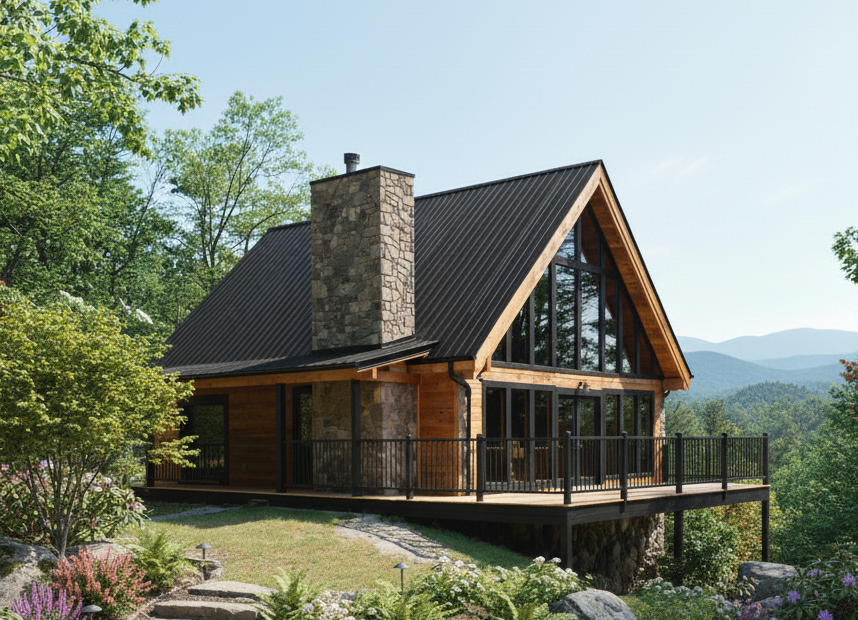
How does laminated timber compare to traditional solid-log construction?
Laminated timber homes are engineered systems, not stacked solid logs. Components are kiln-dried, laminated, and CNC-machined before delivery, resulting in predictable performance, minimal movement, and no reliance on notching, chinking, or long-term settling allowances. This allows interior finishes and systems to be installed immediately after assembly.
Do laminated timber homes require chinking or settling adjustments?
No. Laminated timber walls are manufactured at controlled moisture levels and do not experience the vertical settling associated with traditional solid-log construction. There are no screw jacks, no chinking, and no post-construction adjustment periods required.
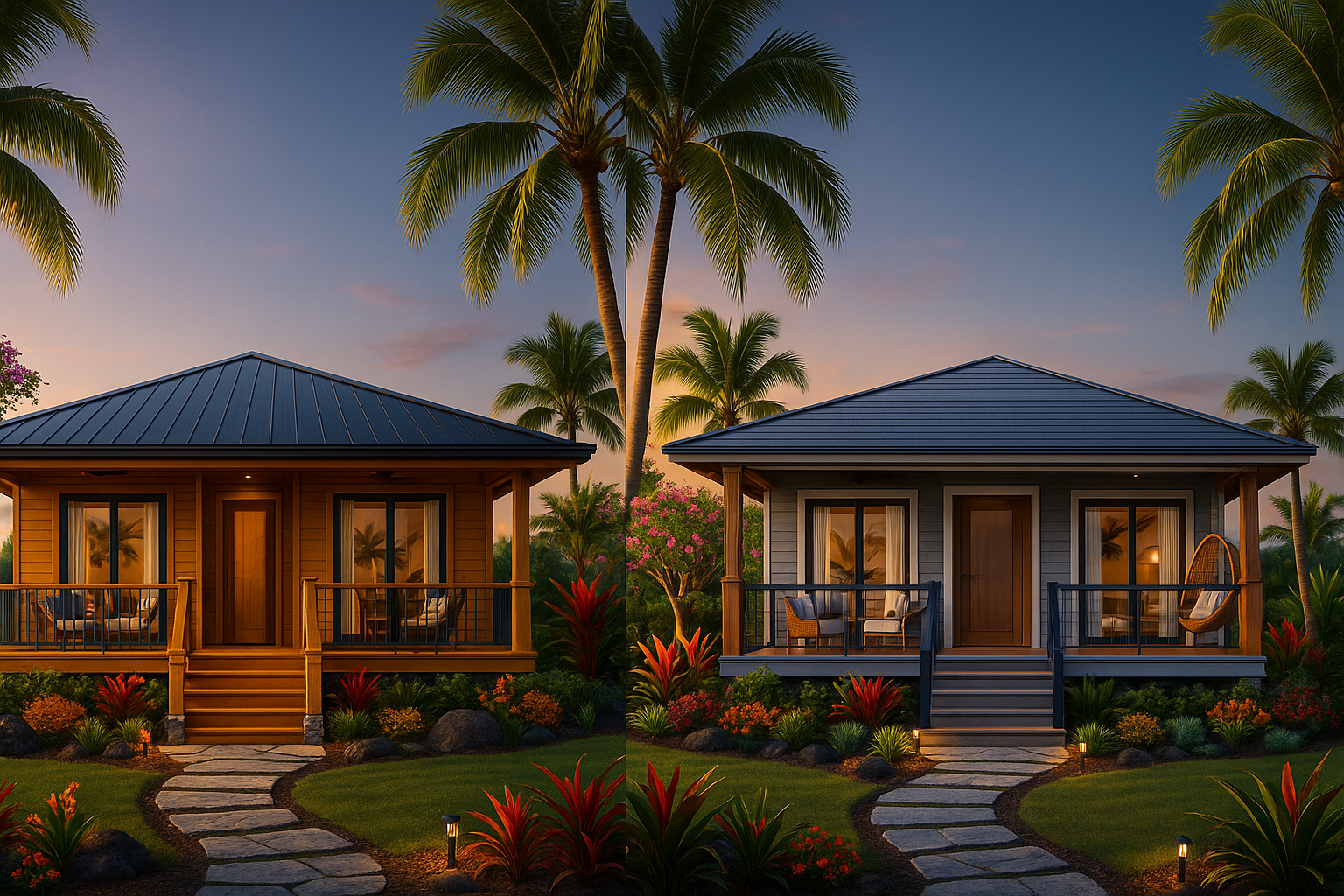
What construction systems are used in laminated timber homes?
Laminated timber homes typically use precision-engineered wall systems made from laminated logs or panels, often combined with integrated roof and floor systems. These assemblies may be single-wall or double-wall configurations, depending on insulation and performance requirements, and are engineered as a complete structural system.
How energy efficient are laminated timber homes?
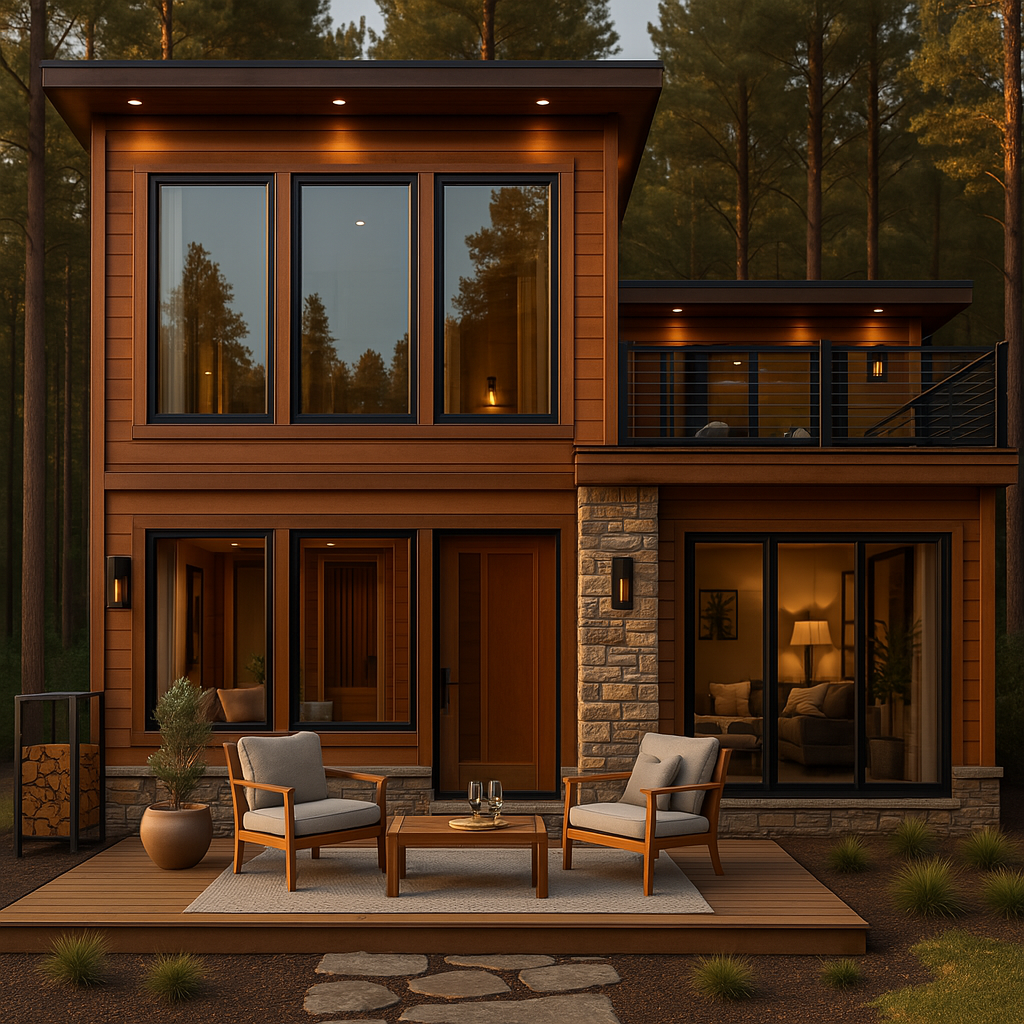
Laminated timber homes perform efficiently due to a combination of solid wood thermal mass, tight CNC-milled joints, and engineered wall assemblies. Thermal mass helps moderate temperature swings, often allowing performance that exceeds what static R-values alone would suggest. Overall energy efficiency depends on the complete building envelope, including roof, windows, doors, and mechanical systems.
Are laminated timber homes fire resistant?
Yes. Laminated timber behaves predictably under fire exposure by forming a protective char layer that insulates the structural core. Properly designed assemblies can meet or exceed standard fire-resistance ratings. Unlike steel, which can lose strength rapidly under high heat, laminated timber maintains structural integrity for defined periods when engineered correctly.
How do laminated timber homes perform in severe weather or seismic conditions?
Engineered timber combines strength with flexibility. Laminated systems use uniform material properties and ductile connection strategies that allow structures to absorb and dissipate forces from wind or seismic events rather than failing suddenly. The high strength-to-weight ratio of wood also reduces overall structural demand during extreme events.
What kind of maintenance does a laminated timber home require?
Maintenance requirements are similar to other high-quality wood structures. Exterior surfaces should be protected with appropriate breathable wood finishes and inspected periodically based on climate exposure. There is no chinking to maintain and no settling-related repairs. Interior wood surfaces typically require only routine care.
What finishes are recommended for laminated timber homes?
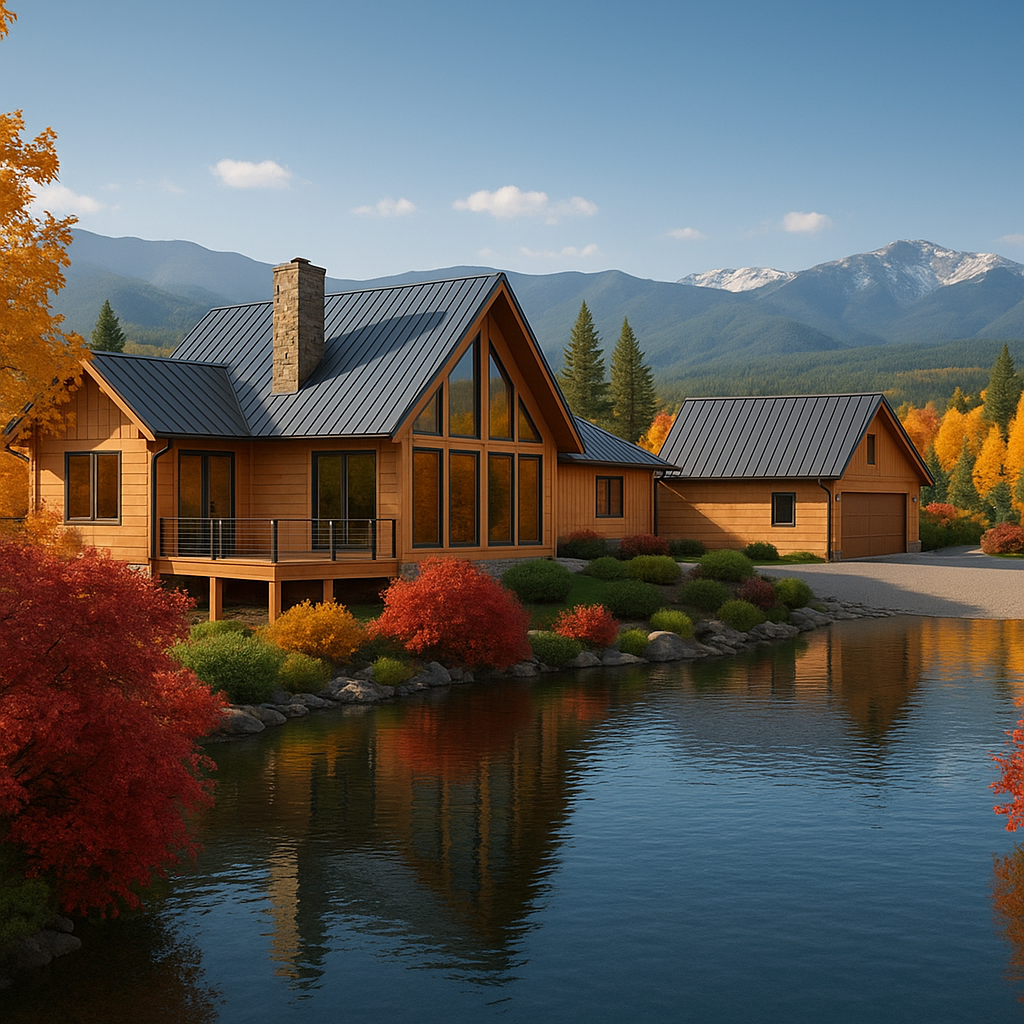
Exterior finishes should protect against moisture, UV exposure, insects, and fungal growth while allowing the wood to breathe. Interior finishes should be compatible with natural wood surfaces and low-emission products are generally recommended. Specific finish selections can be tailored to climate and design goals.
How long can a laminated timber home last?
With proper design, engineering, and maintenance, laminated timber structures are intended for multi-decade to multi-century service life. Engineered wood construction is widely used in institutional and commercial buildings designed for long-term durability.
Is site preparation different for laminated timber construction?
The site must have appropriate access for delivery vehicles, a completed foundation, and adequate staging space for assembly. Because components arrive prefabricated, on-site construction time is often reduced compared to conventional building methods.
Can laminated timber homes be built year-round?
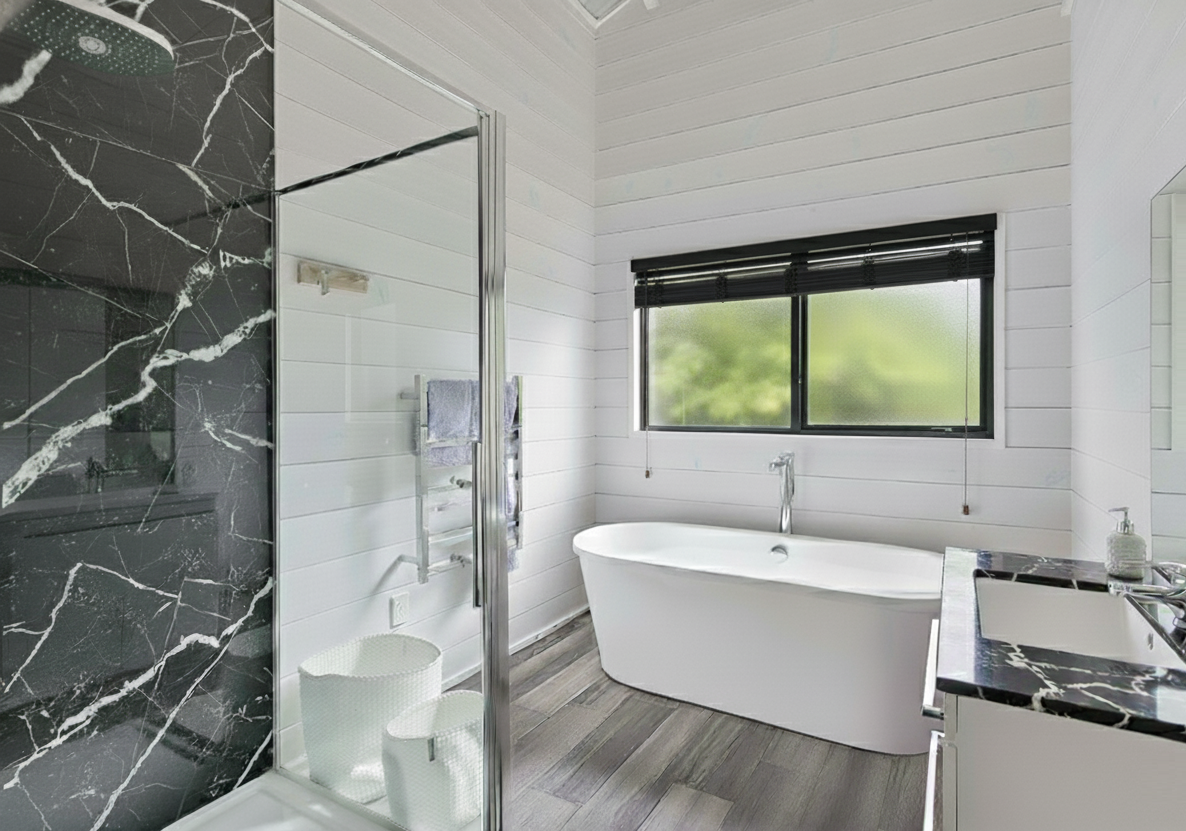
Yes. Prefabrication and dry assembly allow laminated timber homes to be erected in a wide range of weather conditions, often with fewer seasonal limitations than site-built construction.
Are transportation costs included in the home price?
Transportation costs are typically calculated separately based on project location, size, and delivery requirements. These costs are reviewed with each client during the planning phase.
Is the size of a laminated timber home limited by component length?
No. Home size and room dimensions are determined by engineering and design requirements, not by traditional log length limitations. Laminated timber systems support long spans and flexible layouts, with transportation logistics being the primary constraint.
What types of foundations work with laminated timber homes?
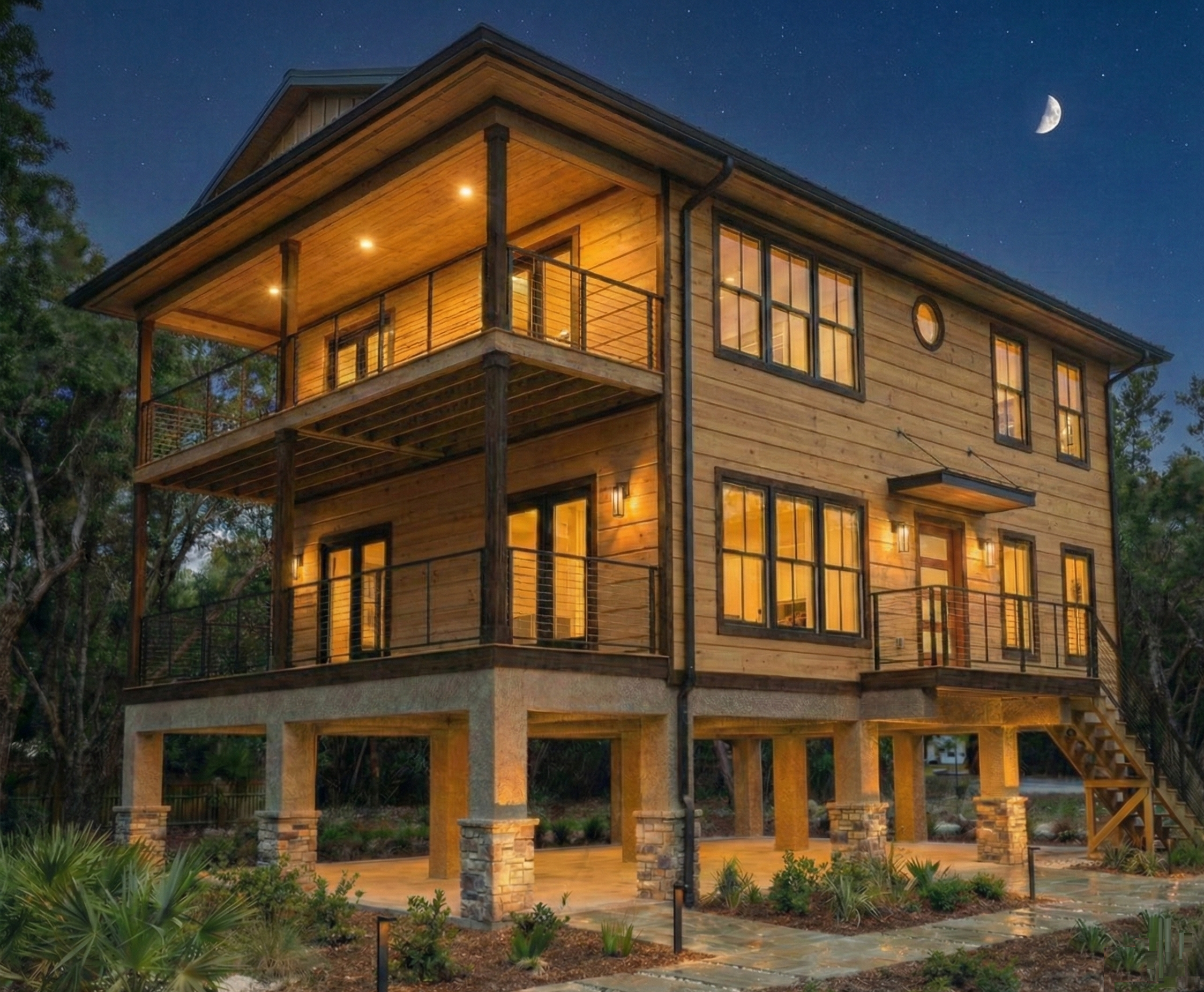
Laminated timber homes are compatible with a wide range of foundation types, including slabs, crawlspaces, piers, and full basements. Foundation selection depends on soil conditions, climate, and overall design.
Can I build the home myself or act as my own general contractor?
Owner participation is possible, depending on experience and local code requirements. Laminated timber systems are engineered for efficient assembly, but professional oversight is strongly recommended for structural, mechanical, and finish work.
Are laminated timber homes maintenance-free?
No home is maintenance-free. Laminated timber homes are designed to minimize maintenance compared to traditional log homes, but routine inspections and exterior care are part of responsible ownership.
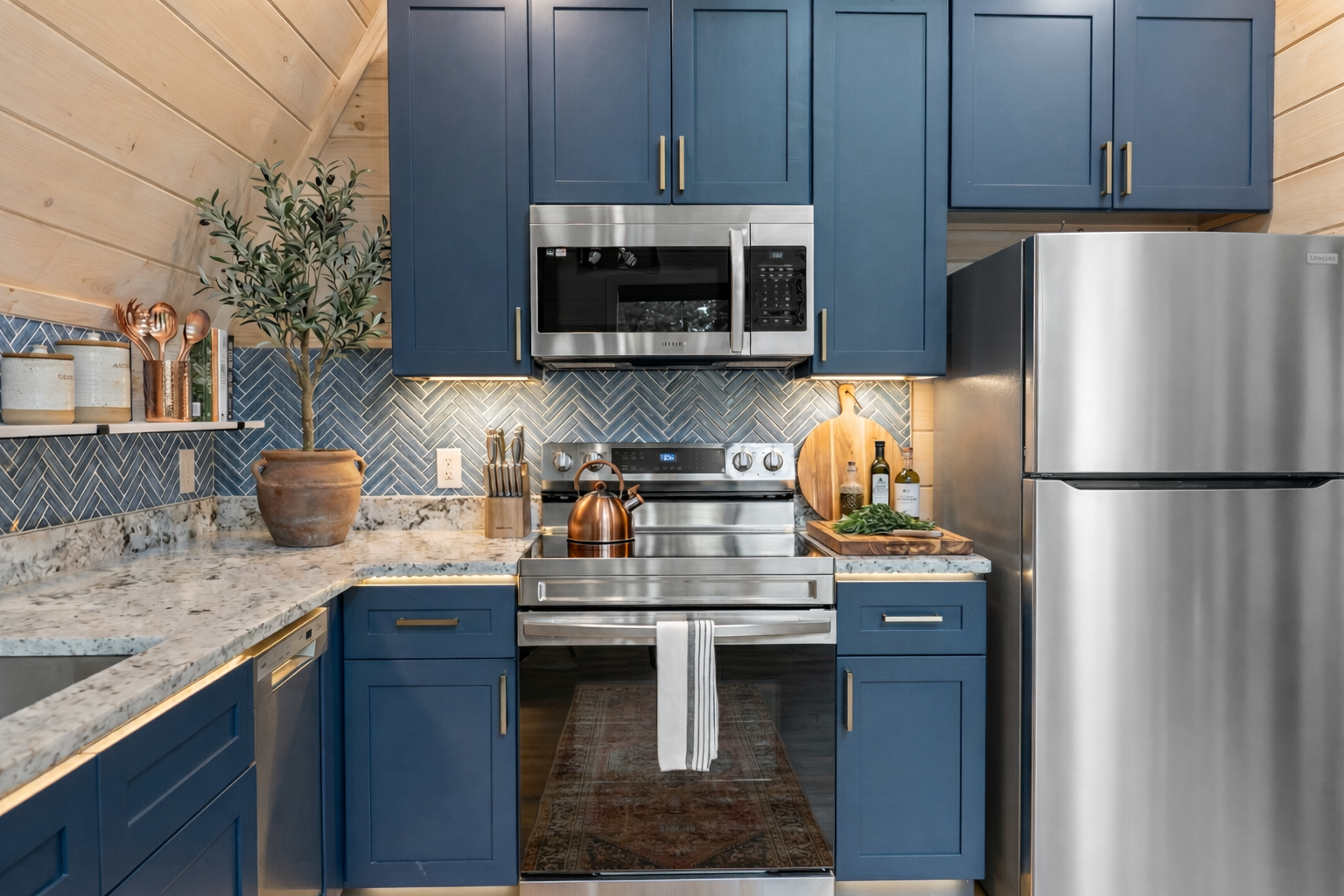
Do you offer standard plans as well as custom designs?
Yes. Standard plans can offer cost and schedule efficiencies, while custom designs allow full flexibility. Both options use the same engineered laminated timber systems.
What wood species are used?
Common species include Western Red Cedar, Douglas Fir, and select Pine, with additional species available upon request depending on project requirements.
Are laminated timber homes less expensive than other construction methods?
Costs vary based on design, location, and scope. Laminated timber homes are often competitive with other high-quality construction methods when total project costs, build speed, durability, and long-term performance are considered.
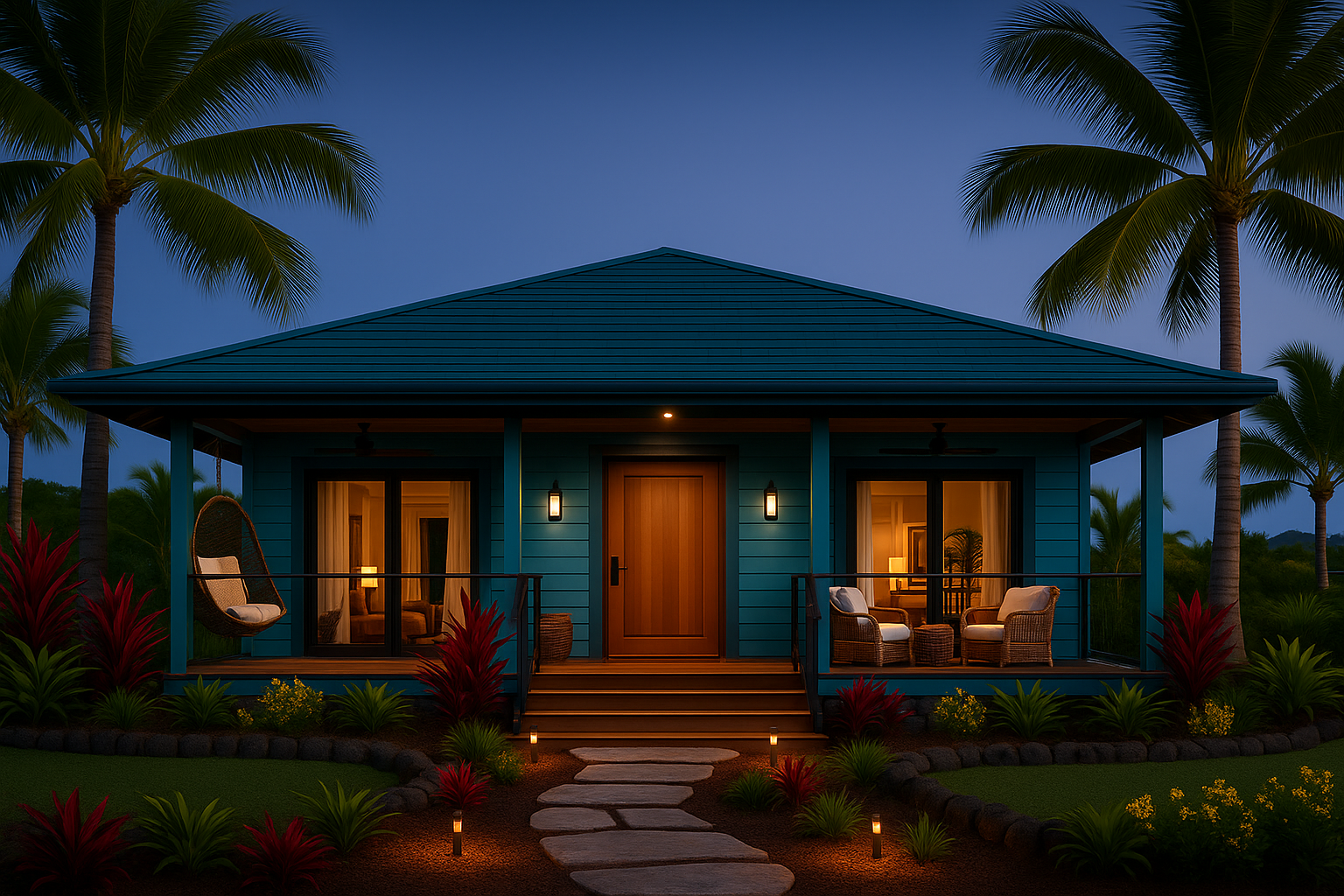
How does U.S. Log & Timber maintain quality and competitive pricing?
Quality is controlled through vertically integrated manufacturing, precision fabrication, and engineered design oversight. Eliminating unnecessary intermediaries allows consistent quality control while maintaining competitive pricing.
How much does a laminated timber home cost?
Pricing depends on size, design complexity, wall systems, finishes, and location. A meaningful estimate requires understanding project goals. U.S. Log & Timber works with each client to define scope clearly and provide accurate pricing early in the process.