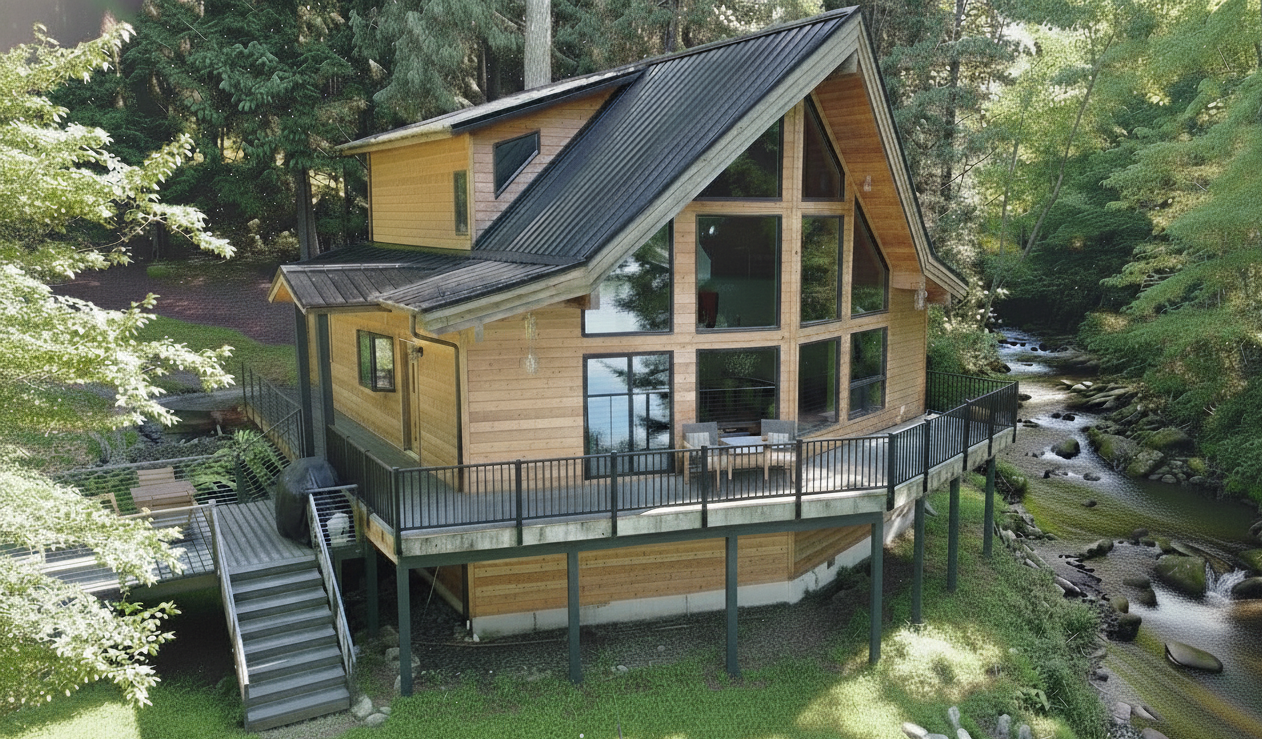
It is a renewable resource
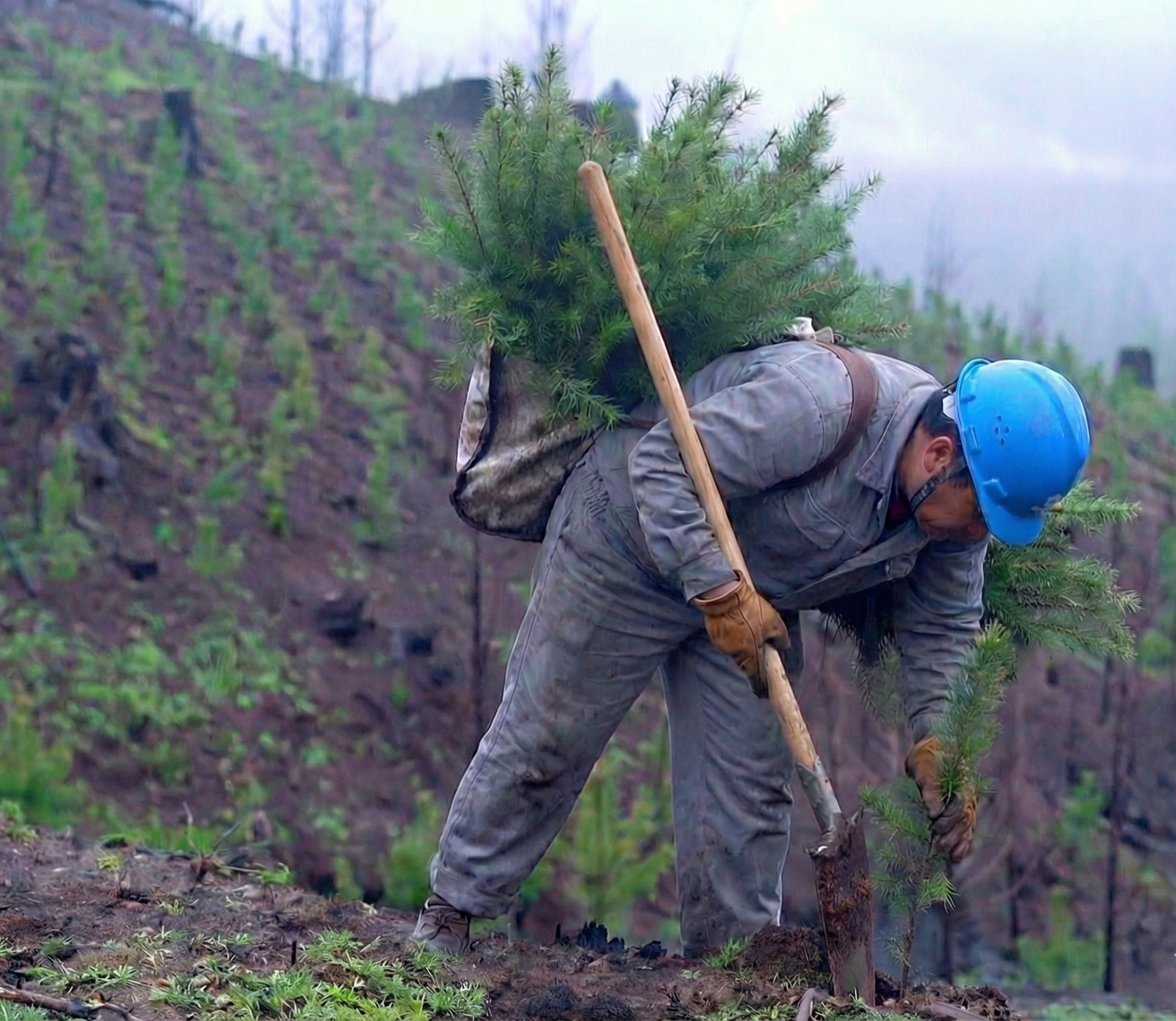
Wood is a renewable building material that regenerates naturally and stores carbon throughout its service life. When used in engineered laminated systems, wood delivers high structural efficiency while requiring fewer raw resources than concrete or steel. Laminated timber manufacturing also allows smaller-diameter trees to be utilized effectively, reducing waste and improving yield per harvested acre.
Long lasting durable material
Properly engineered and protected laminated timber does not suffer the progressive structural degradation common to many conventional materials. Kiln-drying to 9–12% moisture content and factory-controlled lamination significantly reduce checking, splitting, and long-term movement. With routine exterior maintenance, laminated timber structures are designed for multi-decade service life without loss of structural capacity.
Super energy efficient
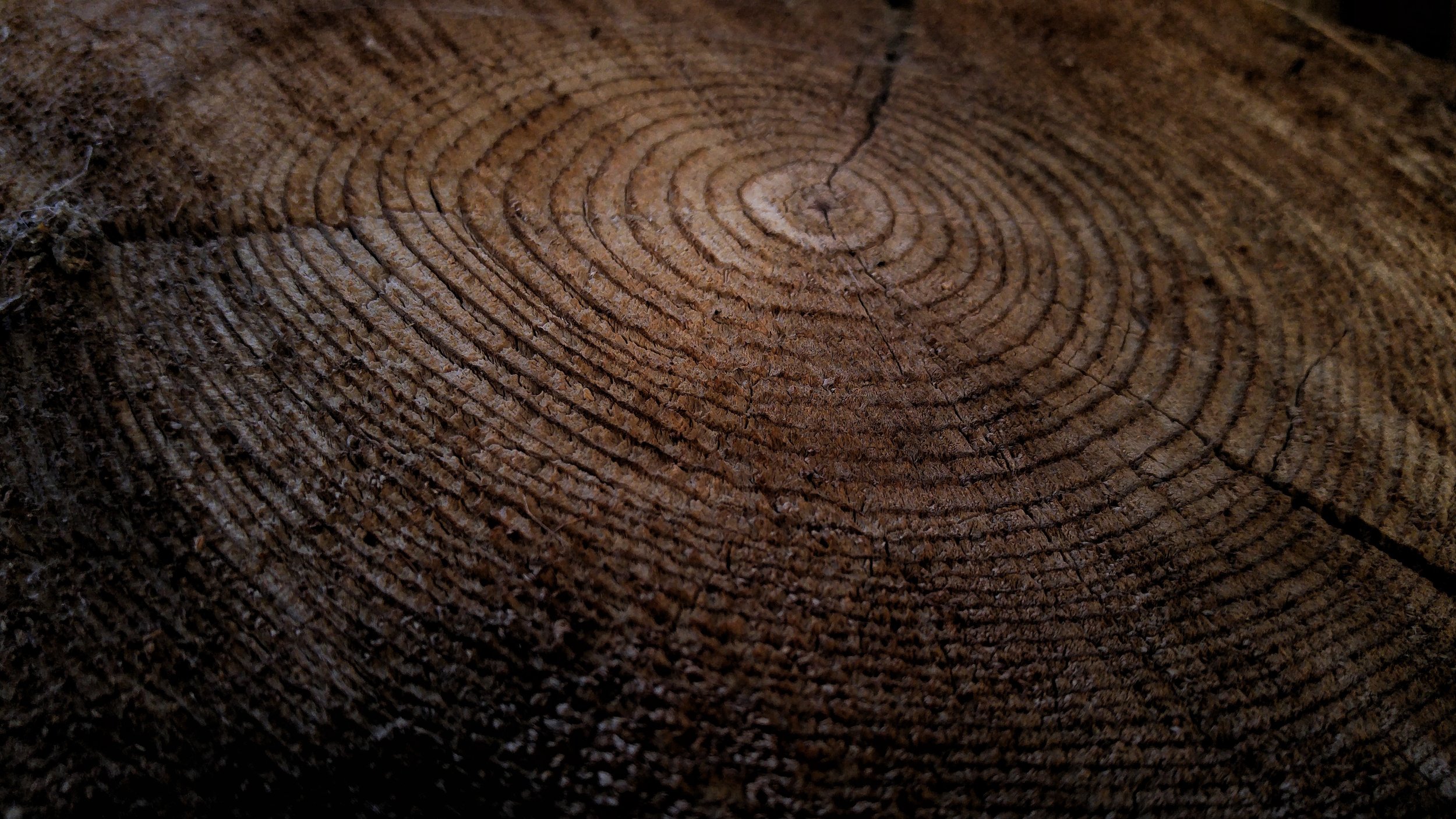
Wood’s cellular structure provides inherent thermal resistance, but its real advantage lies in thermal mass and heat capacity. Laminated timber walls dampen temperature swings and perform 20–30% better than static R-value calculations suggest, storing heat during peak loads and releasing it gradually. This contributes to more stable indoor temperatures and measurable HVAC load reductions.
Better fire resistance
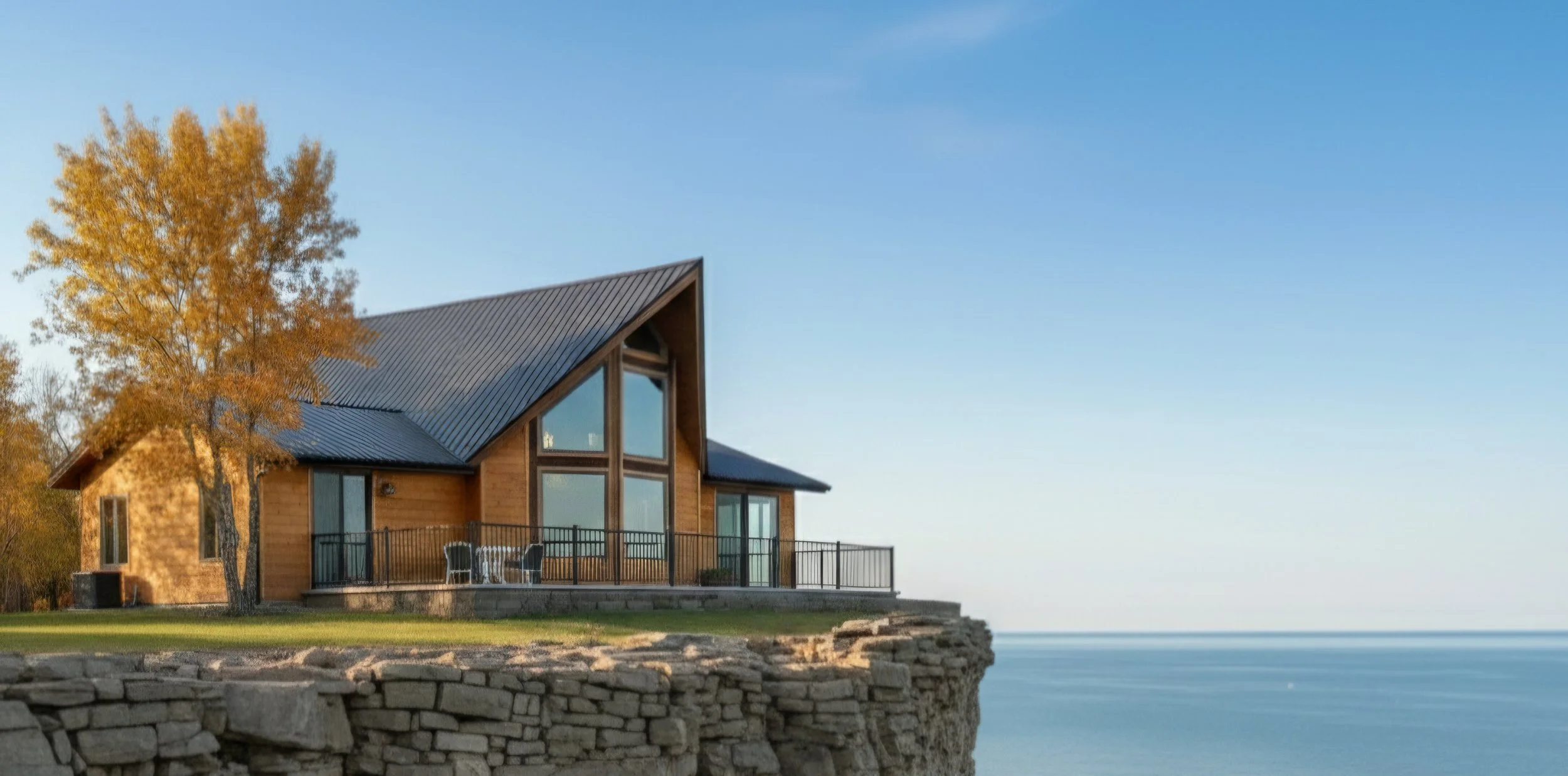
Predictable Fire Performance
Unlike steel, which loses strength rapidly under heat, laminated timber chars at a known, predictable rate (~0.6 mm per minute). This char layer insulates the structural core, allowing properly designed assemblies to achieve 60-, 90-, and 120-minute fire-resistance ratings. Fire behavior is engineered, testable, and code-recognized.
Fit the land
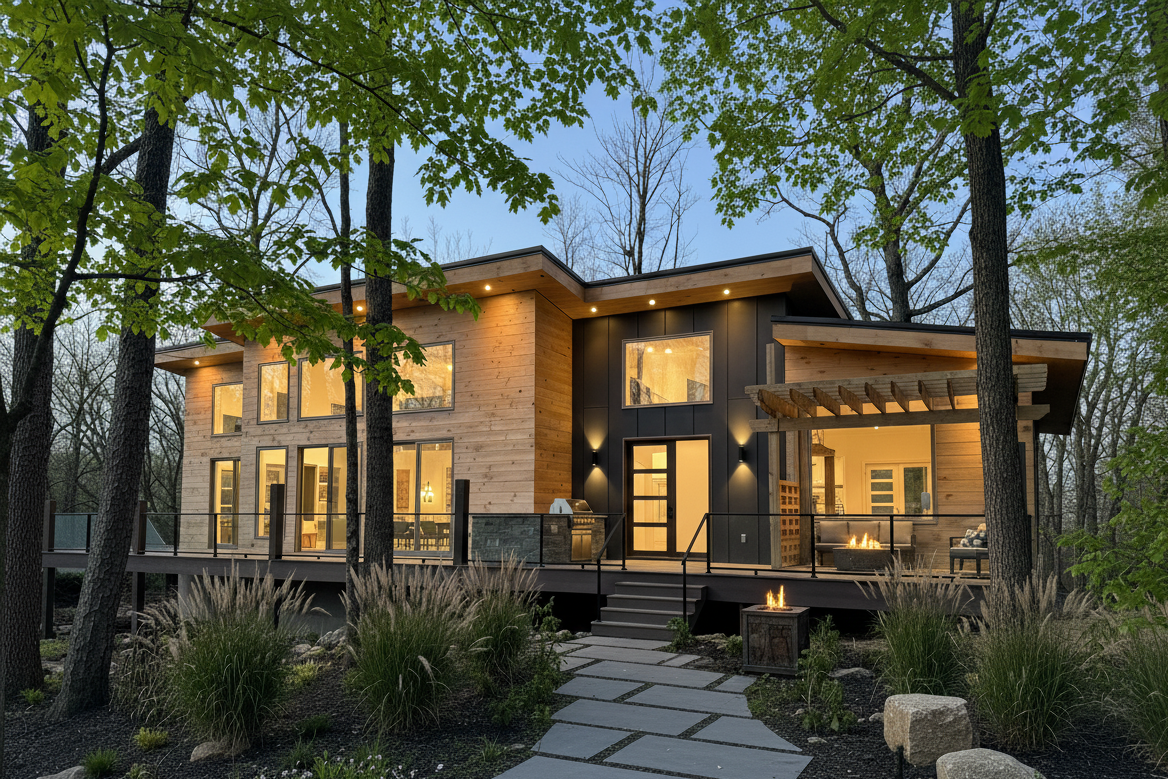
Naturally Suited to the Site
Wood’s high strength-to-weight ratio allows structures to adapt efficiently to sloped or sensitive sites while reducing foundation demands. Laminated timber systems integrate cleanly into both natural and developed landscapes, supporting contemporary architecture without imposing excessive mass or site disruption.
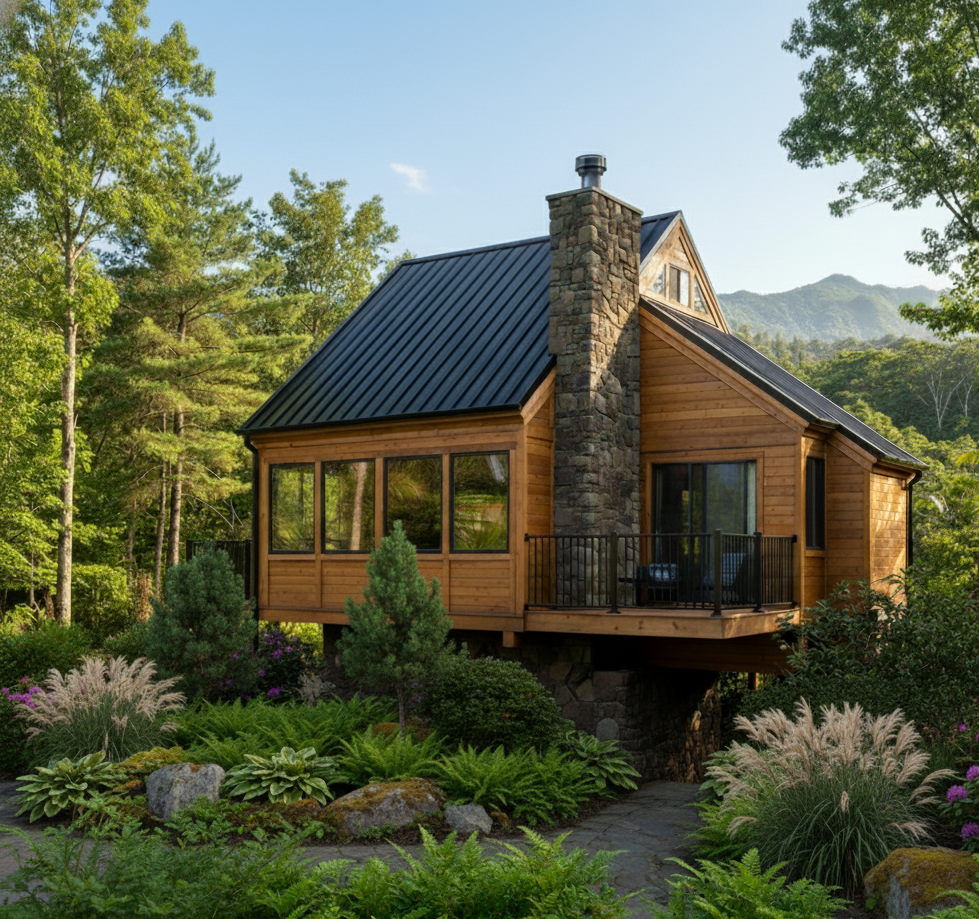
Withstanding various weather challenges
Resilient in Demanding Conditions
Engineered wood combines strength with flexibility, performing well under wind and seismic loading. Laminated systems use ductile connection strategies and uniform material properties that allow structures to absorb and dissipate energy rather than fail suddenly. This resilience, paired with low structural weight, makes laminated timber well suited for diverse climates and challenging environmental conditions.